How to Find mudjacking alternative Des Moines for Stable Concrete
Selecting the Right Concrete Progressing Remedy: Comparing Mudjacking and Polyjacking for Your Demands
Choosing the proper concrete leveling service needs careful consideration of different aspects. Mudjacking and polyjacking each deal unique advantages and disadvantages. Comprehending the processes, expenses, and suitability for specific scenarios is vital. Additionally, lasting sturdiness and upkeep implications play a substantial duty in the decision-making procedure. With these aspects in mind, one must consider their alternatives thoughtfully to identify which approach aligns ideal with their concrete fixing requirements.
Comprehending Mudjacking: Process and Benefits
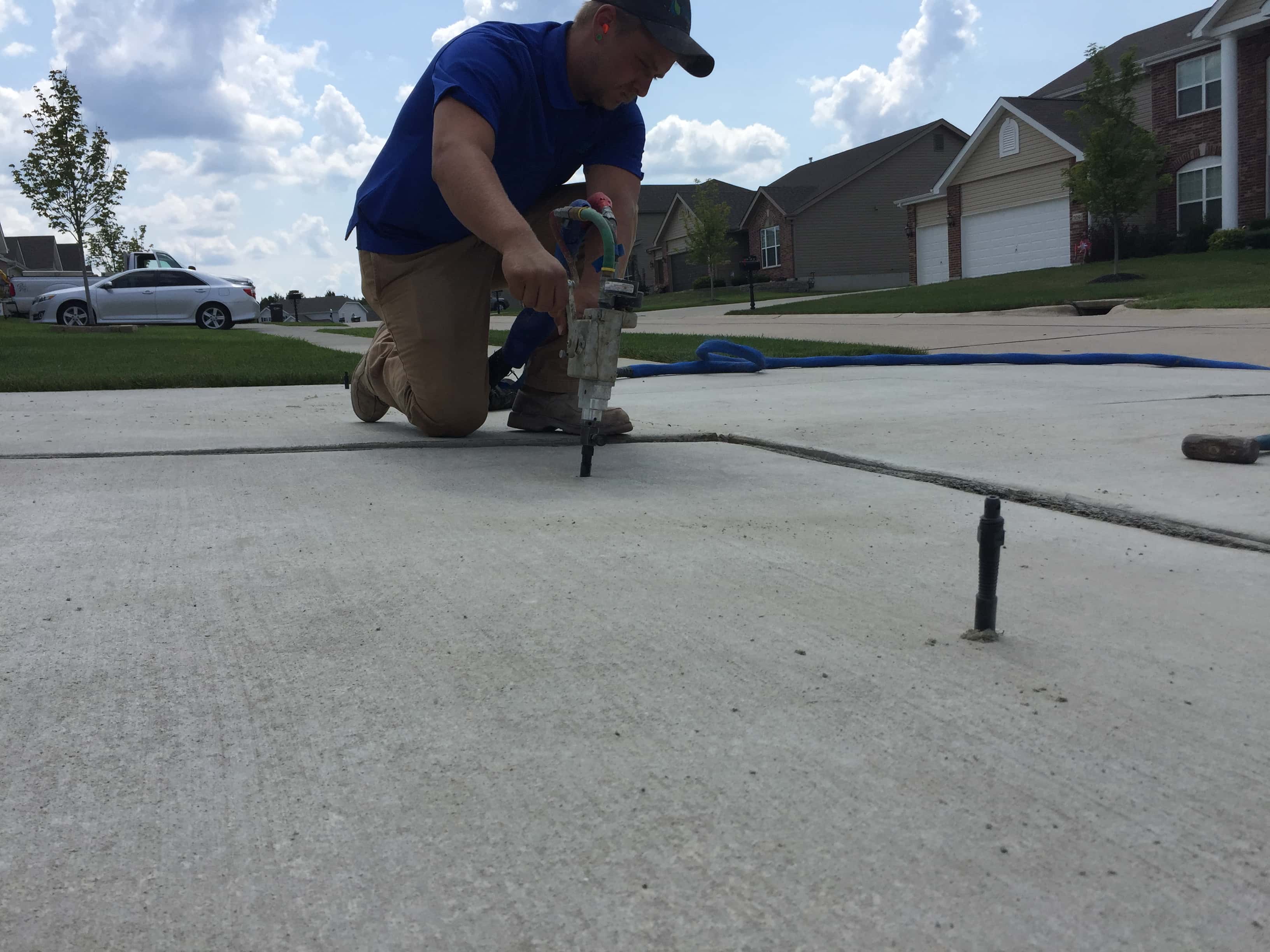
Although various concrete leveling approaches exist, mudjacking continues to be a popular option because of its efficiency and cost-efficiency. This method entails injecting a blend of water, soil, and cement below sunken concrete pieces, elevating them back to their initial height. The procedure starts with piercing tiny openings right into the affected concrete, followed by the cautious insertion of the mudjacking slurry, which fills voids and maintains the foundation.
Among the primary benefits of mudjacking is its affordability contrasted to other leveling remedies, making it available for many property owners. Additionally, the method generally calls for very little disruption, enabling quick repairs without considerable excavation. The resilience of the mudjacking product also adds to lasting results, ensuring that the leveled surfaces continue to be secure over time. Overall, mudjacking gives a efficient and dependable solution for addressing uneven concrete surfaces.

Exploring Polyjacking: Exactly How It Works and Its Advantages
While mudjacking has its benefits, polyjacking, also called polyurethane foam injection, offers a modern-day alternative for concrete progressing that flaunts a number of benefits - BAM Basements. This innovative approach makes use of high-density polyurethane foam, which is infused underneath the concrete surface to elevate and support it. The foam increases swiftly upon shot, loading voids and offering prompt assistance, which reduces downtime for homeowner
One of the considerable benefits of polyjacking is its lightweight product, which lowers the threat of further settling contrasted to conventional mudjacking products. Additionally, polyjacking is highly immune to water, making it suitable for locations prone to wetness. The fast healing time of the foam permits for faster task completion, making it possible for homeowners to return to normal activities practically instantly. Overall, polyjacking offers an effective, long lasting, and eco pleasant solution for dealing with concrete resolving issues.
Contrasting Prices: Mudjacking vs. Polyjacking
When examining concrete progressing solutions, cost is a significant aspect that property proprietors need to take into consideration. Mudjacking normally provides a much more affordable choice, often ranging in between $300 to $1,500 depending upon the task size and complexity. This conventional method makes use of a cement-based slurry, which is generally more economical than the products utilized in polyjacking.
On the other hand, polyjacking tends to be costlier, with expenses varying from $1,000 to $2,500 or even more (polyfoam concrete leveling). This technique uses polyurethane foam, which is advanced and needs specific tools for application
While mudjacking might present a lower initial investment, it is crucial for homeowner to evaluate long-lasting performance against upfront expenses. Polyjacking, though much more pricey, can provide durability and possibly less maintenance demands. Ultimately, selecting between mudjacking and polyjacking ought to involve an extensive evaluation of both instant and future financial effects.
Viability for Various Circumstances: When to Make use of Each Technique
Identifying the ideal concrete progressing technique depends mostly on the specific scenarios of the project. Mudjacking is commonly fit for bigger locations and larger pieces, such as driveways and industrial sidewalks, where its thickness and toughness can successfully lift and maintain the concrete. This approach can additionally be a lot more cost-efficient when handling comprehensive area.
On the other hand, polyjacking is optimal for domestic settings, specifically for smaller sized tasks and locations with intricate landscaping, because of its lightweight and quick-setting buildings. It is less invasive and can be completed with minimal interruption, making it a preferred choice for homeowners. Additionally, polyjacking's resistance to moisture makes it suitable in areas with high water tables. Ultimately, choosing in between mudjacking and polyjacking calls for mindful factor to consider of task size, environmental aspects, and the wanted end result for the concrete surface.
Long-Term Considerations: Resilience and Upkeep of Concrete Progressing Solutions
As house owners and property supervisors consider concrete progressing options, long-term sturdiness and upkeep come to be critical aspects in their decision-making process. Mudjacking, which entails the shot of a cement-based slurry, usually provides a life expectancy of 5 to ten years before potential settling occurs. Its upkeep requirements include keeping an eye on for cracks and making sure appropriate drain to expand its efficiency.
In comparison, polyjacking utilizes high-density polyurethane foam, which is resistant to dampness and does not weaken as quickly as traditional materials. This method can offer an extra resilient option, with life-spans typically surpassing ten years with very little upkeep. Polyjacking's light-weight nature also minimizes stress and anxiety on underlying dirt, better improving stability.
Eventually, the selection between mudjacking and polyjacking depend upon a home's specific demands, local ecological conditions, and the desired longevity of the repair service. Recognizing these facets can guide homeowner toward a more lasting concrete leveling service.
Frequently Asked Concerns
How Lengthy Does Each Leveling Refine Usually Take?
Mudjacking typically takes a few hours to complete, while polyjacking can frequently be finished in much less time as a result of quicker treating times. Both procedures depend on the project dimension and certain conditions existing.
What Are the Ecological Impacts of Mudjacking and Polyjacking?
Mudjacking normally makes use of cement-based materials, which can have a greater carbon footprint. In contrast, polyjacking utilizes polyurethane foam, typically taken into consideration a lot more environmentally pleasant due to minimized waste and lower discharges during production and application.
Can I Do These Methods Myself or Work With a Specialist?
Individuals can try do it yourself mudjacking or polyjacking, but hiring an expert is usually advised (mudjacking vs polyjacking). Experts have the required experience and tools, ensuring a much more reliable and secure approach to concrete leveling jobs
Exist Any Kind Of Service warranties or Warranties With These Solutions?
Many firms use guarantees or assurances for their concrete leveling services. These warranties commonly cover workmanship and materials, making sure consumer complete satisfaction. Possible clients need to ask about particular terms before waging any kind of service.
Just How Do Weather Influence Each Method's Efficiency?
Weather matching information substantially affect both approaches. Mudjacking might be much less efficient in cool, damp atmospheres as dampness can compromise the mixture. Conversely, polyjacking is a lot more functional, frequently executing well in various climate condition, consisting of cooler temperatures.